Sunday, 6 January 2013

2013 and the Art of Blogging (or not)

I started this new year in a slightly different fashion to normal. Unfortunately I had a nasty bout of food poisoning that kicked in on new years eve and laid me low for all of new years day (aka as my birthday) which was pretty miserable.

It's a funny time of year at the best of times. The evaluating of the previous year and the hopes and aspirations for the following one. The mixture of the hype of NYE plus birthdays is a potent mix so perhaps spending the 1st of January feeling a bit sorry for myself on the sofa wasn't such a bad thing.

January tends to be a quiet month for many musicians. I've got some nice bits and pieces to keep me going but am looking forward to getting on with things that the last few months of touring have prevented me from doing. The tail end of last year was incredibly full on, lots of great concerts, tours plus writing a couple of things, a chapter for a book and a paper for a journal. So it felt that I hardly had any time at all!

A lot of that pressure is off for a while so I'm beginning to remember all the other bits and pieces that I'd been meaning to do. Blogging is one thing, updating my website another. Preparing for the "physical" release of the Gallay Caprices disc (only available "virtually" up until now). Last year my house was rearranged a bit so that my husband and I could each have a room to work in - so I'm now up in the attic (being a fair bit shorter than my husband this suits me perfectly whilst it would have been impossible for him). This is proving a wonderful move, it makes an excellent practice room and it's great to have the time to prepare for performing the Gallay Caprices this coming week.

Thursday, 4 October 2012

Préludes, Caprices, Fantaisies – Concerts Cachés

How time flies when you're having fun!

It's curious to think back to when this blog started and why. The original impetus was to have some way of documenting my trip to Paris as part of my Finzi Scholarship and the eventual outcome of that is the album Préludes, Caprices, Fantaisies - Concerts Cachés which has just been released by Resonus Classics.


The disc is available directly from www.resonusclassics.com (where you can also download the sleeve notes - in English, French and German - for free, regardless of whether you buy the disc as well!). It's also available from iTunes and Amazon.

And here is a little video all about Jacques-François Gallay and the pieces on the album.


Friday, 17 June 2011

New disc - just out!

Kathryn Cok and I are pleased to announce the release of our debut disc.  Sonatas for Horn and Fortepiano (Challenge Classics) features sonatas by Beethoven, Krufft, Leidesdorf and an early 19th century Haydn movement transcribed for horn and fortepiano.


Available in all good record shops plus:
Amazon (ukdefr,)

and soon to be on itunes!

More information on the disc can be found on my website and a nifty little video about it can be found here.  Hope you all enjoy!

Thursday, 2 December 2010

Eeeek - long time away.

Oh blimey.  I hadn't realised how long it was since I was last here!  Probably that's a fair reflection on how busy the last few weeks have been.

So in summary!

I've just got back from battling the British winter, getting back up to the Bate Collection, Oxford, which VERY kindly lent me their Raoux cor solo for the last few weeks.  A wonderful instrument and I'm very sad to give it back.

Just before I left Paris I got the opportunity to visit the Cite de la Musique and see the Raoux cor solo that belonged to Gallay and play it a little.  It was great to have the chance to compare the Bate Collection instrument with this instrument and reassured me that I had made the right decision in using the Bate Collection instrument for this project.


I've been back in the UK for the last week.  The final week in France was taken up with recording not only the 12 Caprices, but also 12 of the unmeasured Preludes AND 12 of the Fantasias - a real bonus.  The recording was probably one of the most enjoyable I've done.  Though not un-stressful from the point of view of the mountain of music I had in front of me working with Claude Maury (producing) and Hannelore Guittet (engineer) was a joy.  It was incredibly cold in the countryside (La Salle Glazier at the Musee national de Port-Royal des Champs) but beautiful.  Photos of the sessions can be found here.

Thursday, 11 November 2010

And still it rains...

Bleurh.  More rain.  (And more Parisiens saying to me "you're from England - you should be used to it").  Today I'm feeling a little blue - not because of the weather but because I'm moving on to a new apartment.  I've been renting off a couple of colleagues who've been on holiday the last three weeks.  I feel utterly spoilt as it's a beautiful place in a great district (the 19th - around Belleville).  It's been particularly nice to get to know a new part of Paris, especially one of the "further out" districts.  It's still amazing though to be living in a large city that's so walkable - hence continuing grumpiness about the rain.

Today was also interesting in a "let's see how another country does things" kind of way with it being the 11th of November.  As it's a jour férié (bank holiday) so the language school was closed and I was thinking that it'd be like Monday mornings with everything shut however I was surprised that so many shops and restaurants were open.  Except a couple of places I wanted to go which were, naturally, shut.  Drat.

This afternoon was the recording session with Concert d'Astree - Emanuelle Haim's group.  Funnily enough I hadn't realised that I was missing working with other musicians so much.  It's been tremendous to have the time to focus in so much on one piece (or set of pieces) and very unusual as normally life is more hectic.  Also, it is unusual for me to be working on music that involves no one else.  So today it really struck me what I've been missing.  The other horn players for this session Jeroen Billiet on 1st, Yanick Maillet on 2nd and Cyrille Grenot on 4th, a particularly friendly group.  Jeroen was sounding stunning on a rather nasty tricky horn part - it was the Act III Sinfonia from Handel's Guilio Cesare which is fiddly and high for the first horn player.  It was also great (and at times frustrating) chatting afterwards.  Jeroen I've known for a long time and know to be extremely knowledgable about various bits and pieces of musicological history, however Cyrille I had heard about but only met (briefly) the other day at the rehearsal.  A number of people had told me that Cyrille would be worth speaking to as he's quite an expert on the history of the horn in France (I always have to put it that way to avoid saying "the French horn" and then having to clarify things).  I felt pleased to be able to follow more of the conversation but frustrated as every so often I would struggle with the french a little more - and I'm certain I missed a lot that they were talking about.  But Cyrille was incredibly helpful and has offered to go to some of the Archives with me if time permits, also he knows were a few things are that I didn't know about such as letters.  I'm finding that you really do have to know the right people often to be able to dig these things out - catalogues are often incomplete (or inaccessible unless you're actually at the library/archive).  Funnily enough there is a part of me that is rather glad about this - it'd be a shame if research became the sort of activity that could easily be done just by sitting at a computer with internet connections visiting the various online catalogues and ordering copies of the music/letters/whatever by email and living in a little self contained box.

Wednesday, 10 November 2010

Ohhhhhh! Lots of goodies!!!!!

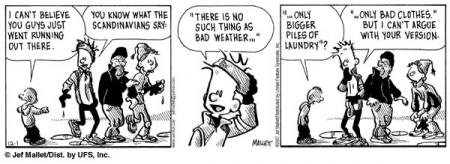
What a wonderful day!  The last few days have been a little miserable.  Nothing horrific!  Just horrible weather which is a frustrating my plans to walk most of Paris.  I'm always a fan of the maxim "there's no such thing as bad weather, just bad choice of clothes" or something like that...  However my trusty wellies are back in London and therefore, despite my generally good decisions in packing (balancing the various requirements - departing in early October, returning late November, covering Italy, Switzerland, Germany and France and yet wanting to be a little minimalist!) I've been struggling the past few days.

Click to see full size: Frazz 12-01-07
I had wanted to go on a long trek on Sunday and had hoped to walk down to the Sorbonne and maybe even make the Catacombes.  But the constant downpour put pay to that.  Instead I wondered down to the  Cimetiere du Pere Lachaise which seemed particularly apt on a grotty day.  A fascinating place - some really tremendous statues.  Though I was rather surprised that I couldn't find a decent list of who's "there".  The "celebrity" lists are easy to find but is there a fuller "directory"?   I had some vague memory of passing through there once before and seeing a "Raoux" which, of course, I couldn't find again.  I did make a pilgrimage to see where Rossini was briefly (before being returned to Italy) and found the plastic flowers and dead candles particularly apt - I think he would have had a giggle at them.  I also thought I had found Gabriel Fauré (FAURE inscription plus a lyre on the "door") but I think he's at Passy.  


Then today I had an extremely productive afternoon at the Bibliotheque.  I got a couple of hints from helpful colleagues (where to head and how it all works) which was useful.  These type of places always seem to have their own ways of doing things.  Everyone at the Bibliotheque was terribly helpful and I managed to get my mits on some of the things I was looking for and there were a couple of things that were pleasant surprises!  I was dancing with glee when I discovered one thing that really makes me sure of the choices I've made for the crooks for the Caprices.  However I'm convinced I'm not going to use up my 15 days I've purchased but it opens up the possibility of just popping in - especially in April when I'm over at the Opera Comique.  A few hunches I'd like to follow up....


Sunday, 7 November 2010

Manière de faire le trille.


A bit of a wash out of a day (quite literarily - it rained and rained and rained - thus messing up my original plan of a long walk).  So took the opportunity to get a bit more work done on learning French.  Also a bit of time to get back to reading Gallay's Methode.  The below is the first draft on his chapter on the trill.  PLEASE NOTE THIS IS WORK IN PROGRESS.  If anyone wishes to use this do let me know first as it may well have been revised!

THE TRILL

[1] The Trill that many people have demanded and demand at the wrong moment of the cadence [2], is a very difficult ornament to execute perfection on the horn; it results from a successive beating, flowing between two notes which are a tone or semi-tone apart.   This beating must accelerate more or less inkeeping  with the character of the piece in which It is in.

The method in which trills are taught by the methods published in recent years appears to me to be incorrect in that [by these methods] the tongue must remain completely foreign to the execution [of the trill] whilst effectively it is only the lips that act to move from the lower note to the higher note.  Without wanting to concern us with the root of this controversial question and passing to review all the inconveniences, there emerges a parallel principle that I will nonetheless not be prevented in delivering to the appreciation of my readers.

First, the trill that is made with the lips will always have something weak, timid which contrast, often in a shocking manner, with the style of the piece in which it is used.  Next it is often quivering, because, in my opinion, the lips are powerless to act with the extreme vivacity that is demanded.  Finally the movement (one could almost say convulsion) of the lips, a sort of nervous contraction, makes the face grimace and tests the chin with a disagreeable trembling which can react [badly?] on the left hand.

It is on the contrary the tongue, and the tongue alone that is able to do the work to produce the trill; it’s movements are still more rapid staying concentratingly  in the mouth with no exterior evidence: the trill, made thus, has the advantage of being at the same time flowing with more balance between the beats with more speed,  above all between the sharp notes.

THE MANNER IN WHICH TO PERFORM TRILLS

The trill is not easily made with the same facility on all notes of the scale, it will be necessary at first to work on the open notes which are more favourable to this ornament than the stopped notes.

The tongue will emit with softness the first note, as in an ordinary tongued note; then to more easily alternate between the lower note to the upper note, the tongue will lightly beat the internal edge of the lips, whilst strongly supporting the breath; these beats must be, so to speak, undulating, [the tongue] must in a way never strike a blow.

It is easy to make an exact idea of the mechanical play of the tongue in the trills: after hitting each note, the tongue carries itself forward, and comes, as I said, more high, it brushes the internal edge of the lips, then withdraws onto itself in a retroactive movement, and so on until the breath expires.  This goes and comes continually (if I am able to thus express myself),  the two notes flow closely together, and produce the trill.

It is necessary above all to give the same value to each of the two notes, to flow between them equally without jerking, and to accelerate the beating progressively until one succeeds in making quickly moving trills.  It is only by constant work and stubbornness that one will succeed in obtaining the speed and equality in the beating of the notes, and consequently return to master the trill.

Before beginning the following examples, the student must take care to breathe as much air as possible, in order to play them in a single breath; and he will not loose sight of making also the slurs which must be held onto as much as possible and their separation which has been marked with some effort.


[1] I give his only part of the trill and the manner in which it is made.  An explanation of the preparation and the termination are to be found with the musical ornaments that you can see on page 76.
[2] The term Cadence is used in music to show the end of a phrases or a momentary pause.